Decolonized Museum – Crawford Lake
2025 | Academic | Individual Work | Professor Behnaz Assadi | Exhibition & Cultural
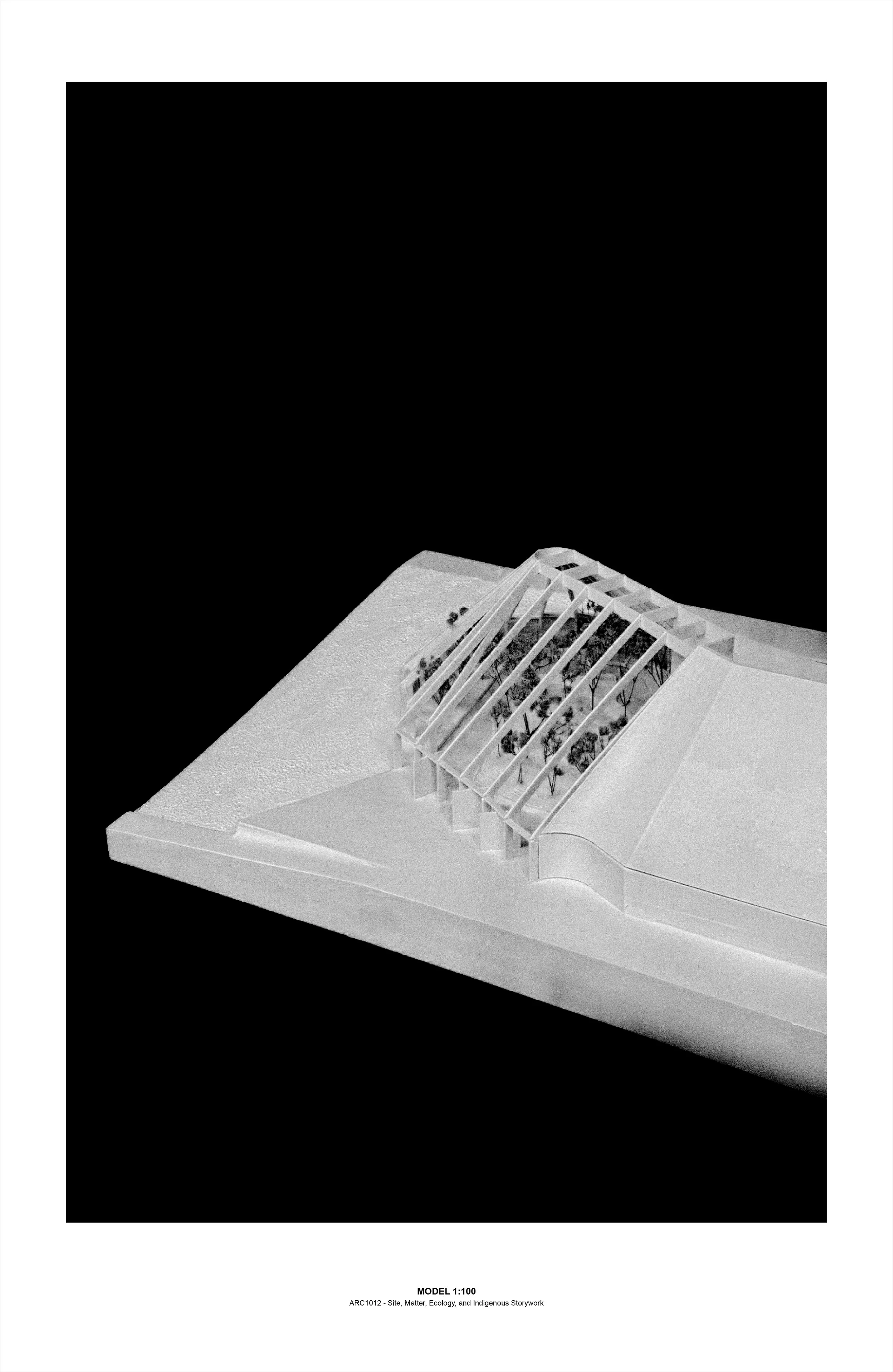
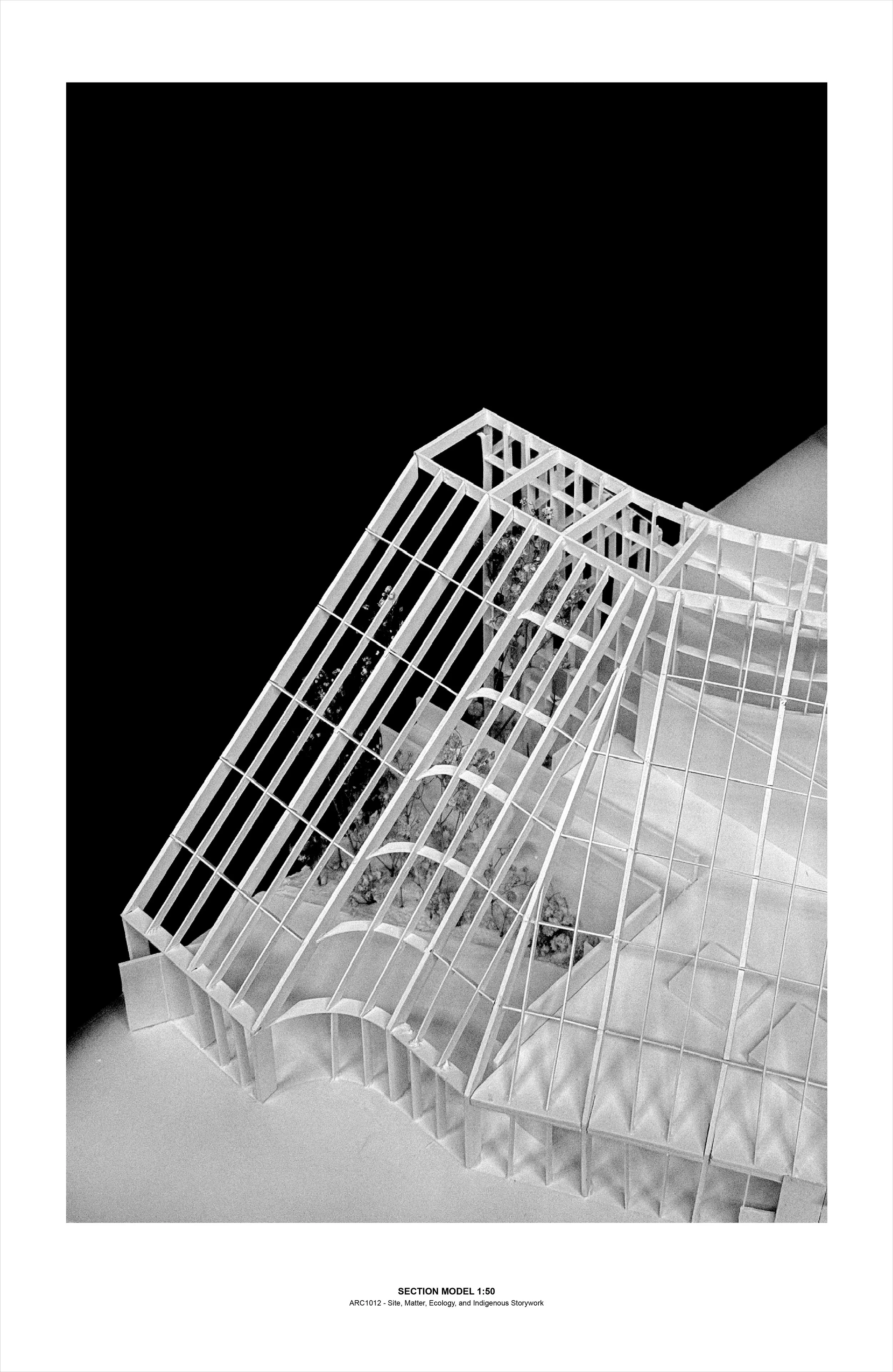
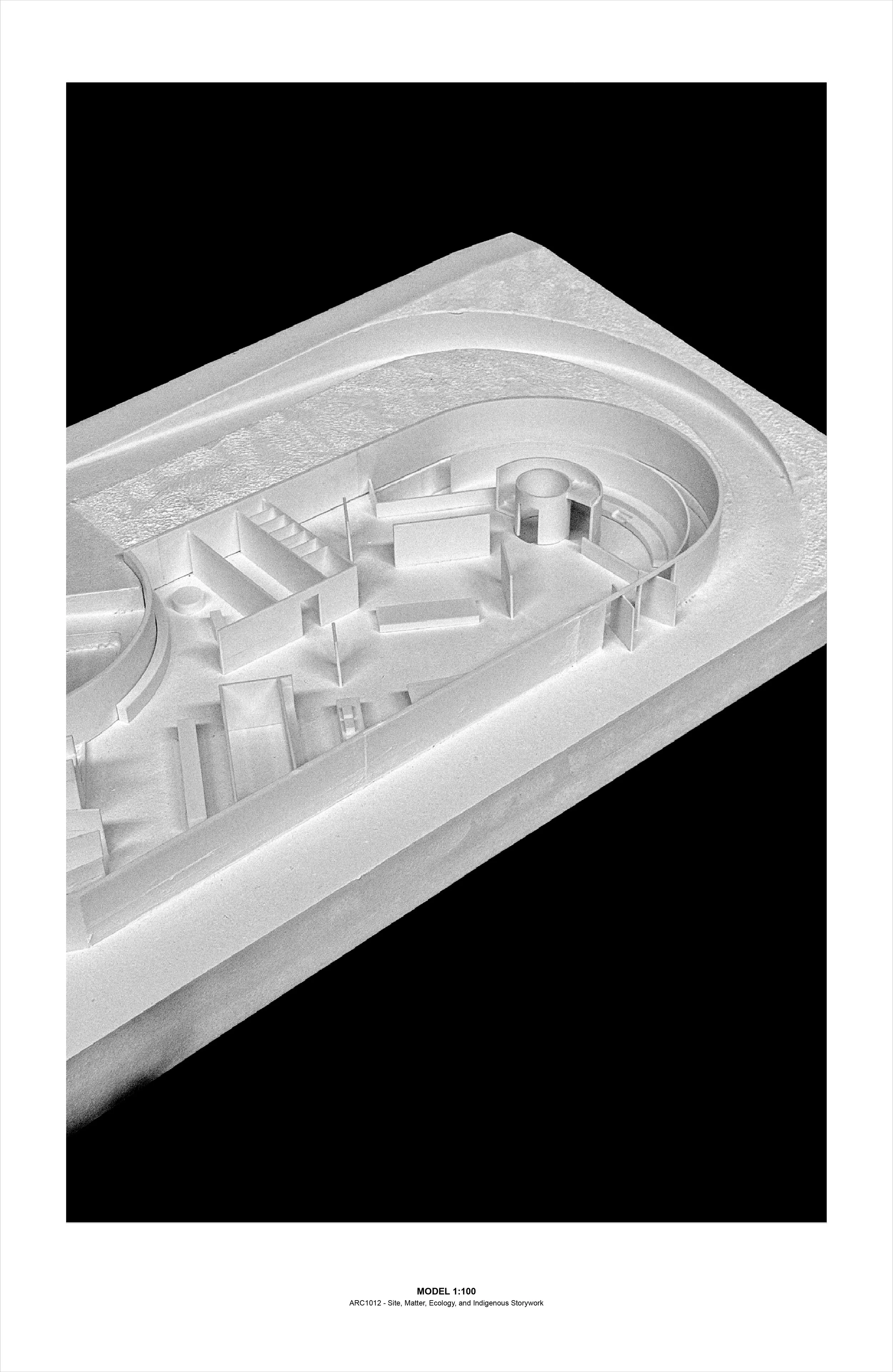
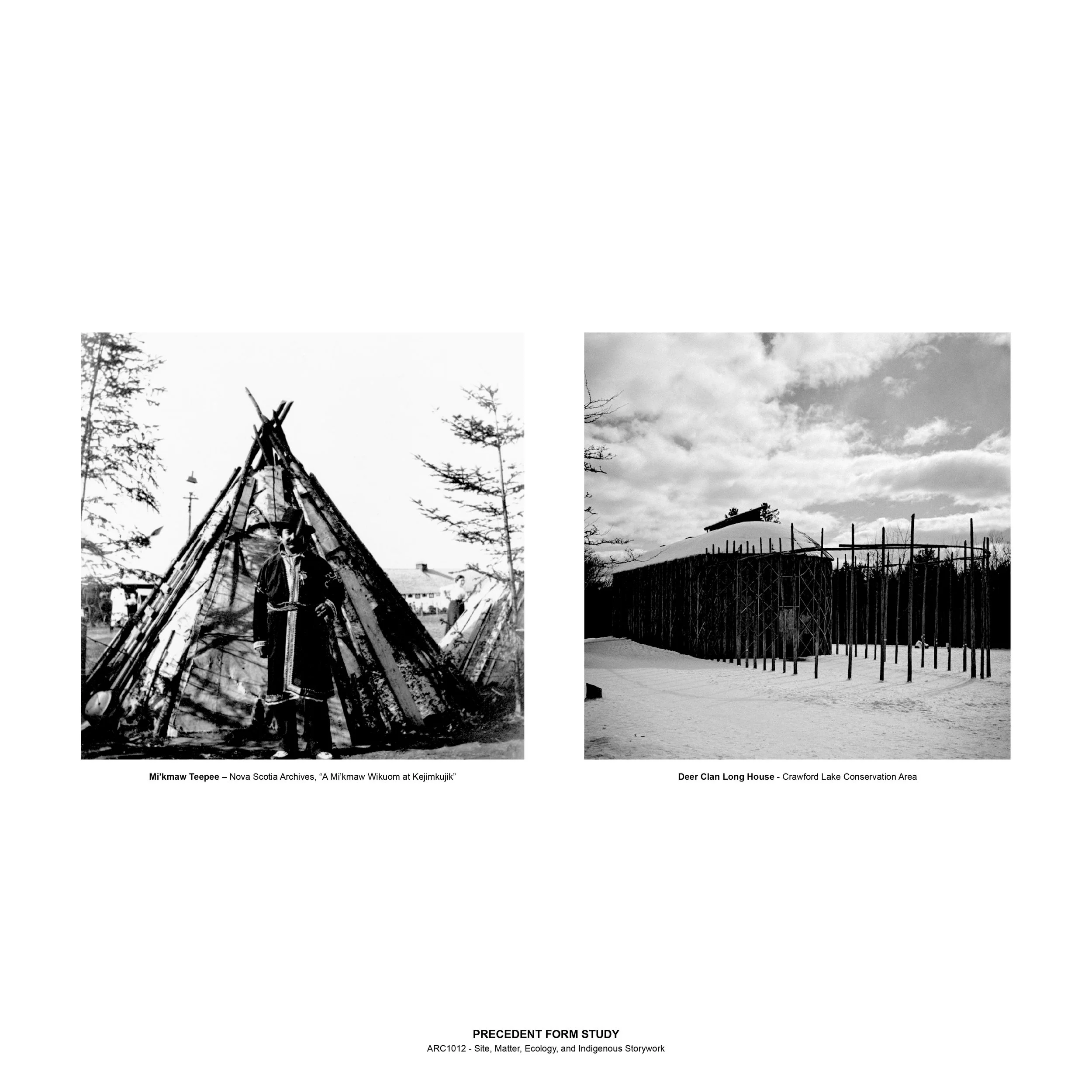
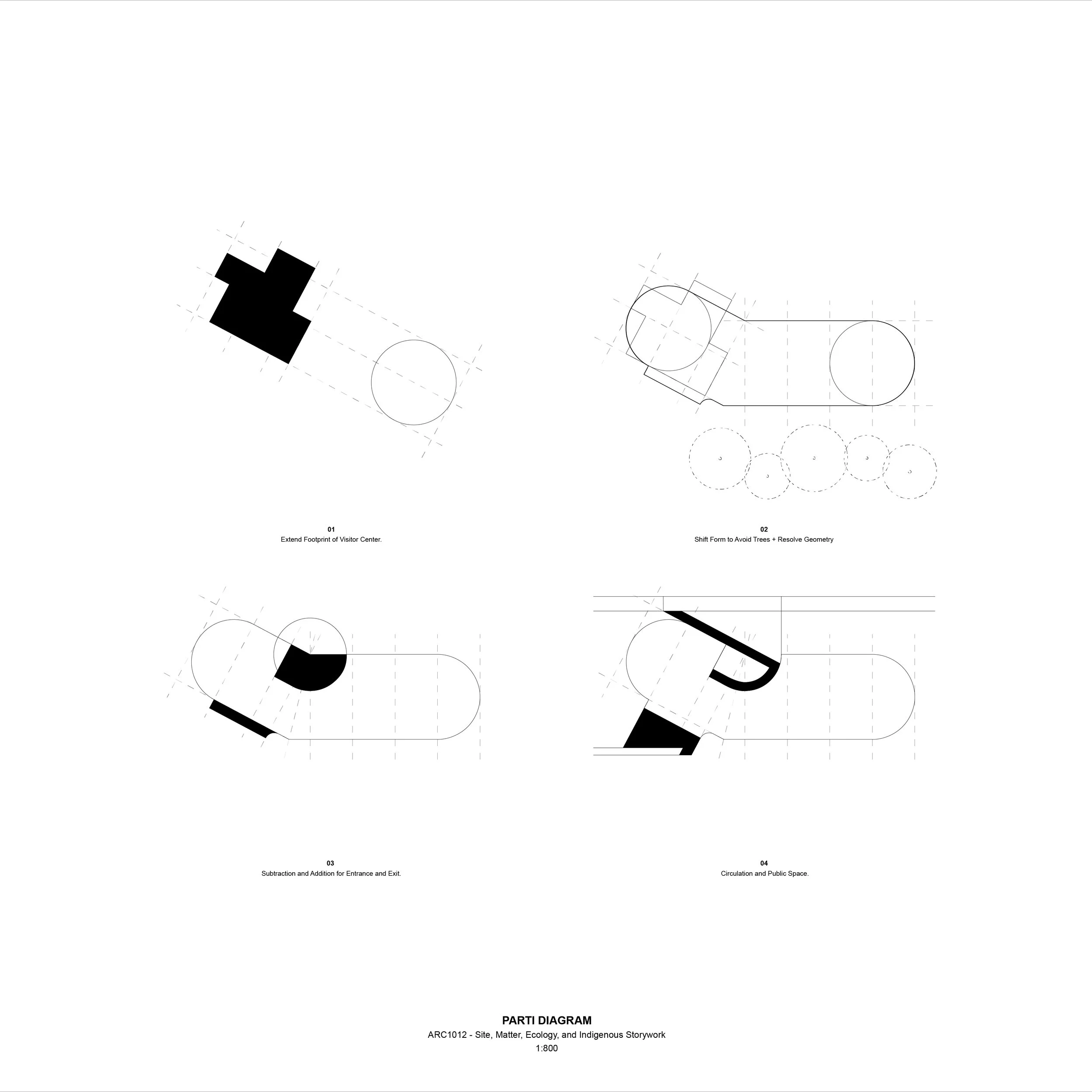
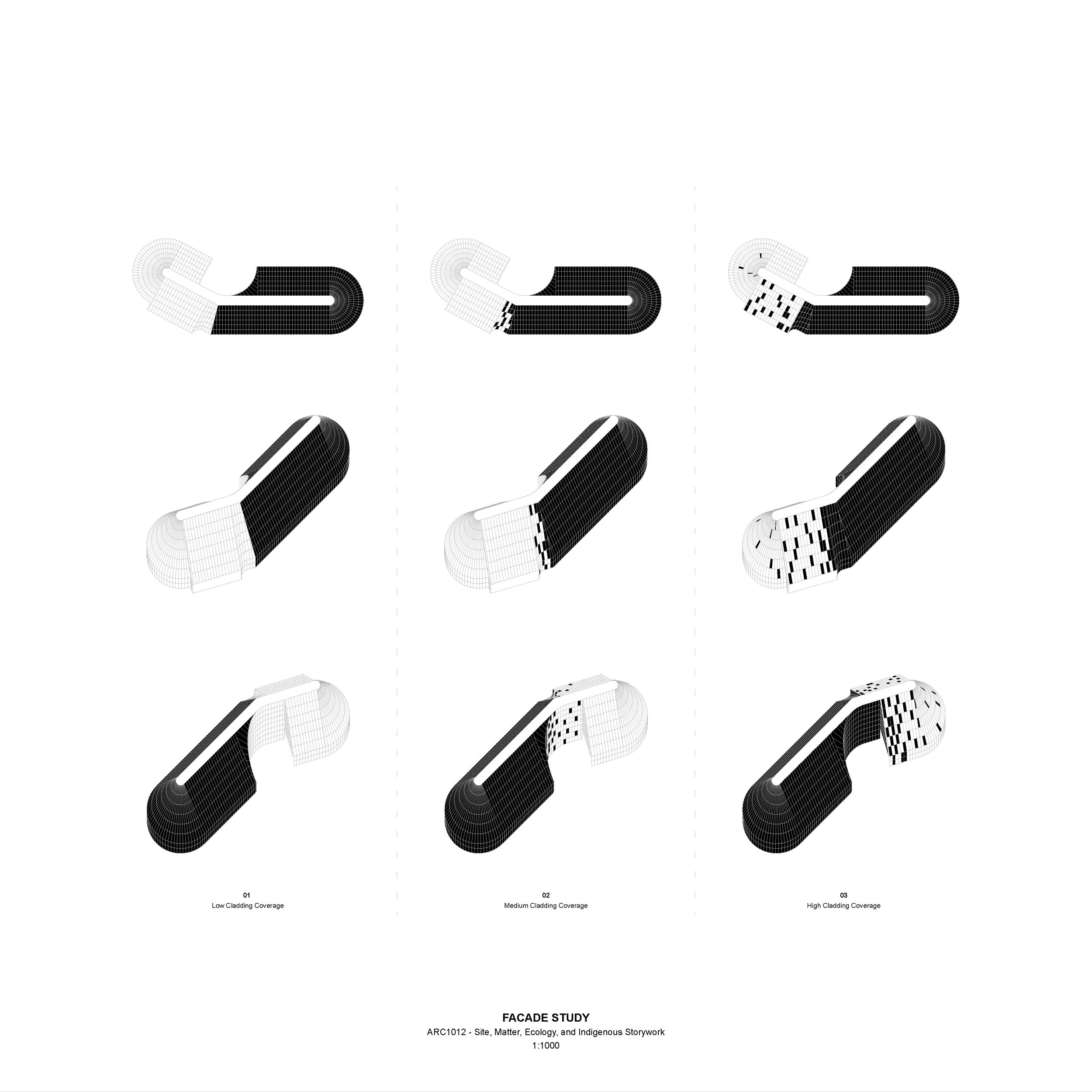
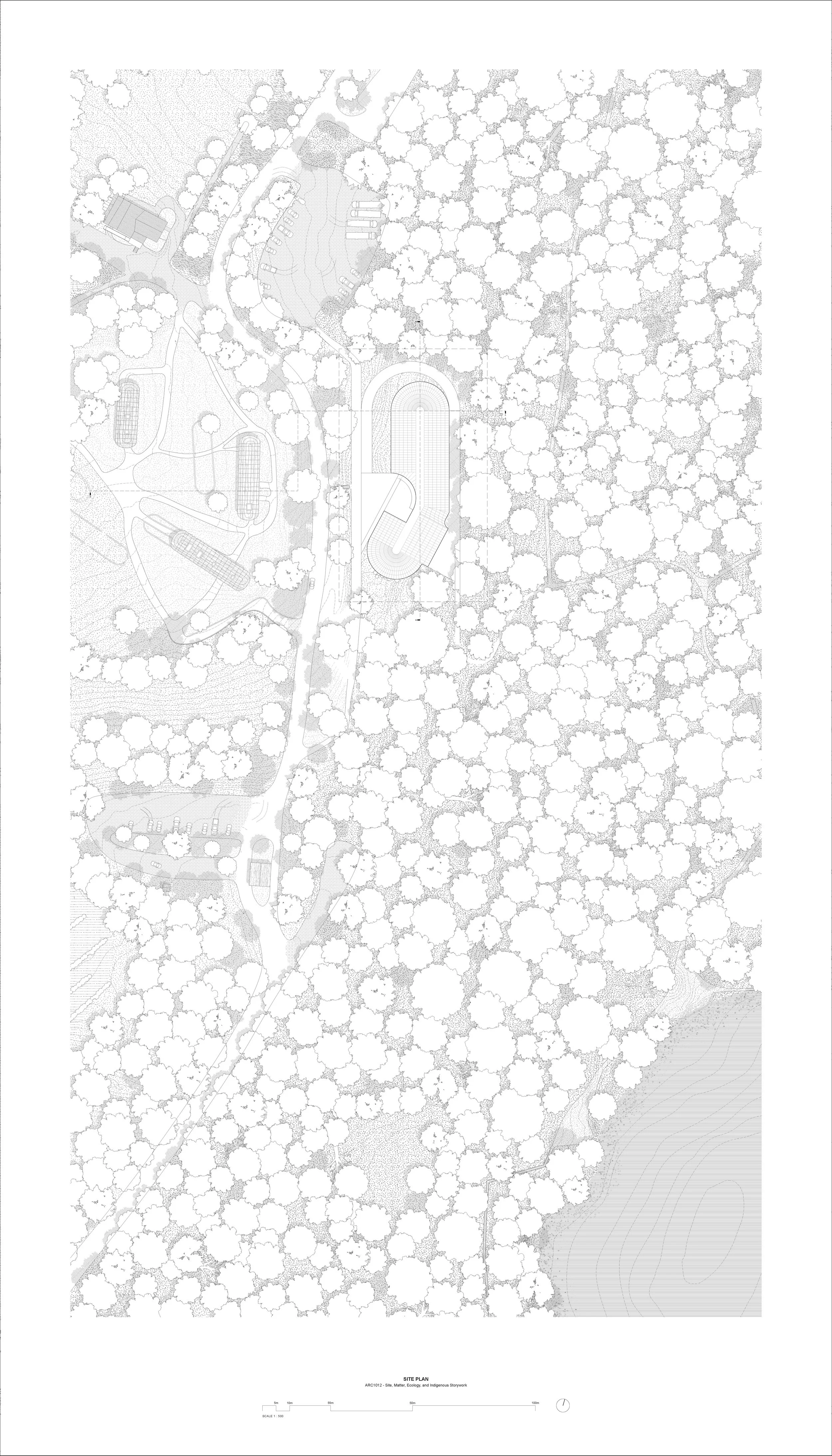
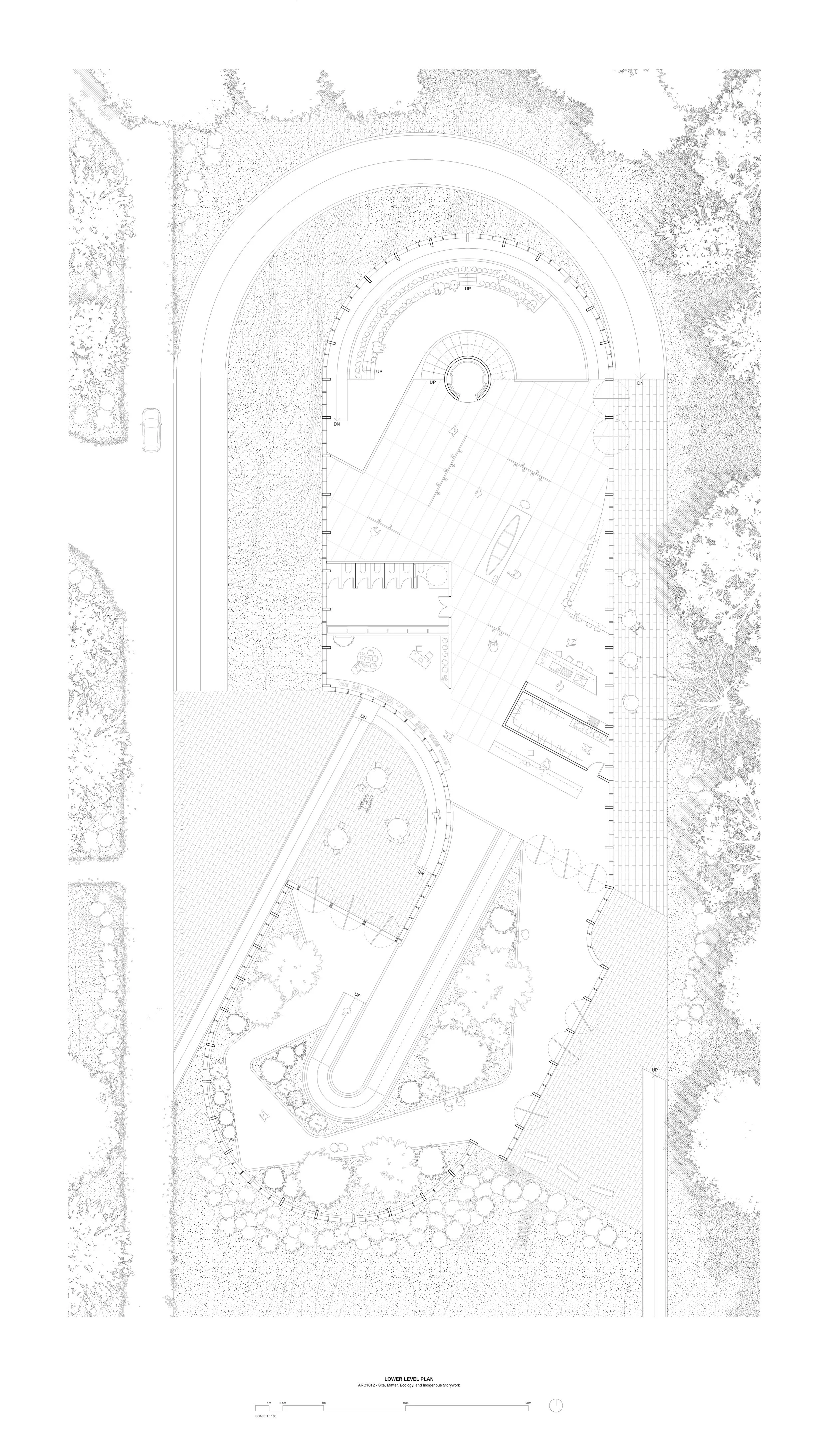
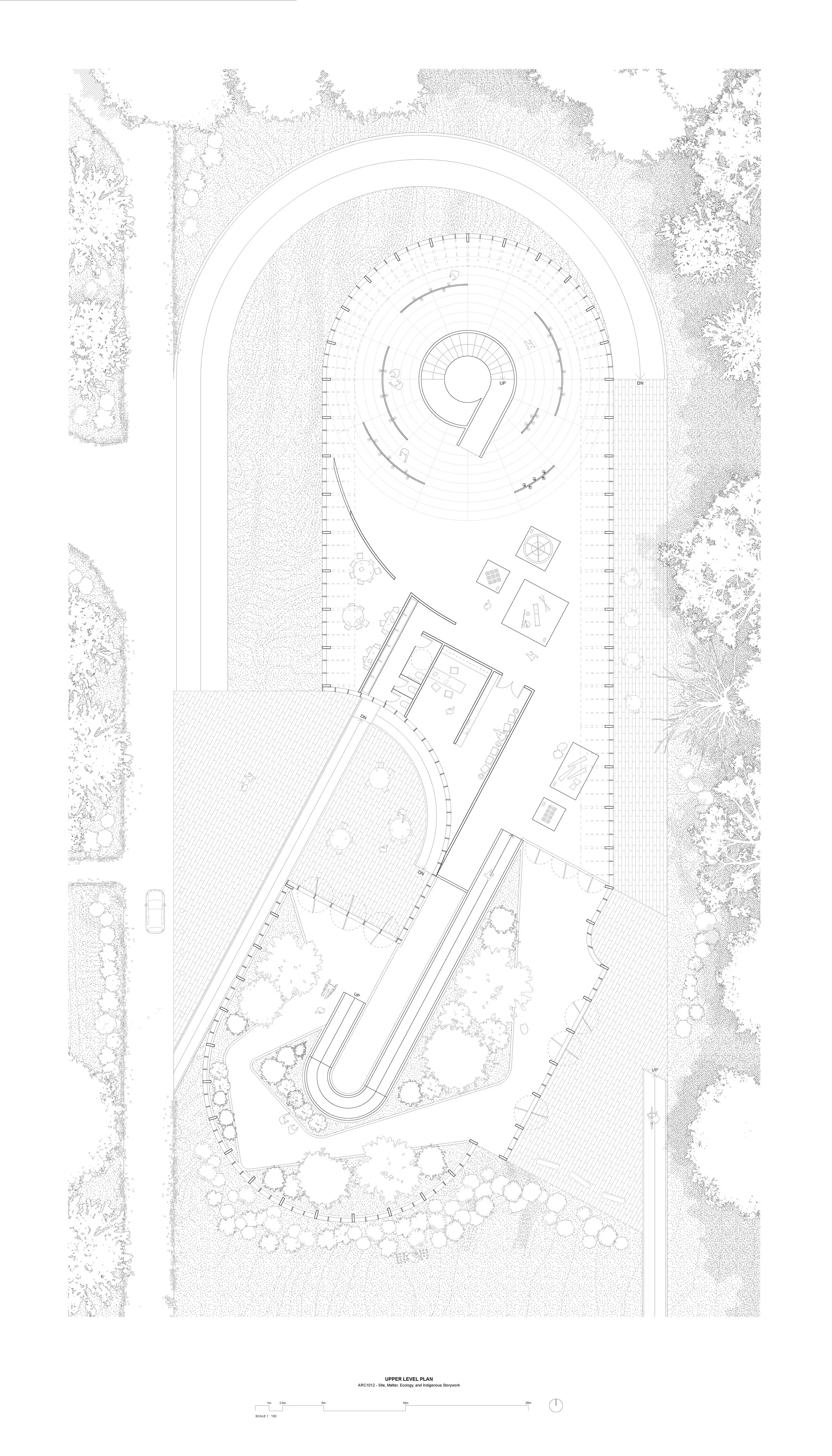
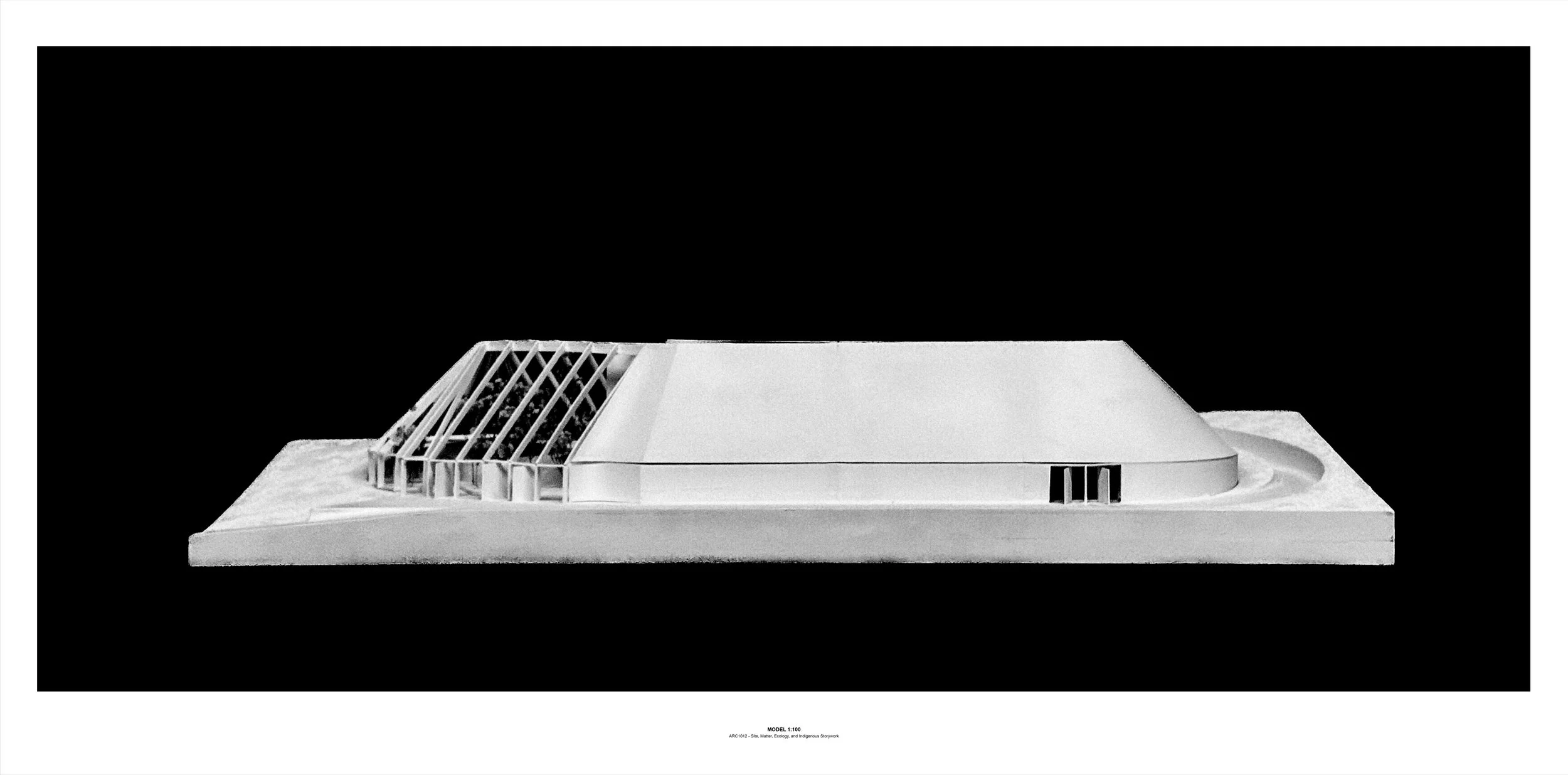
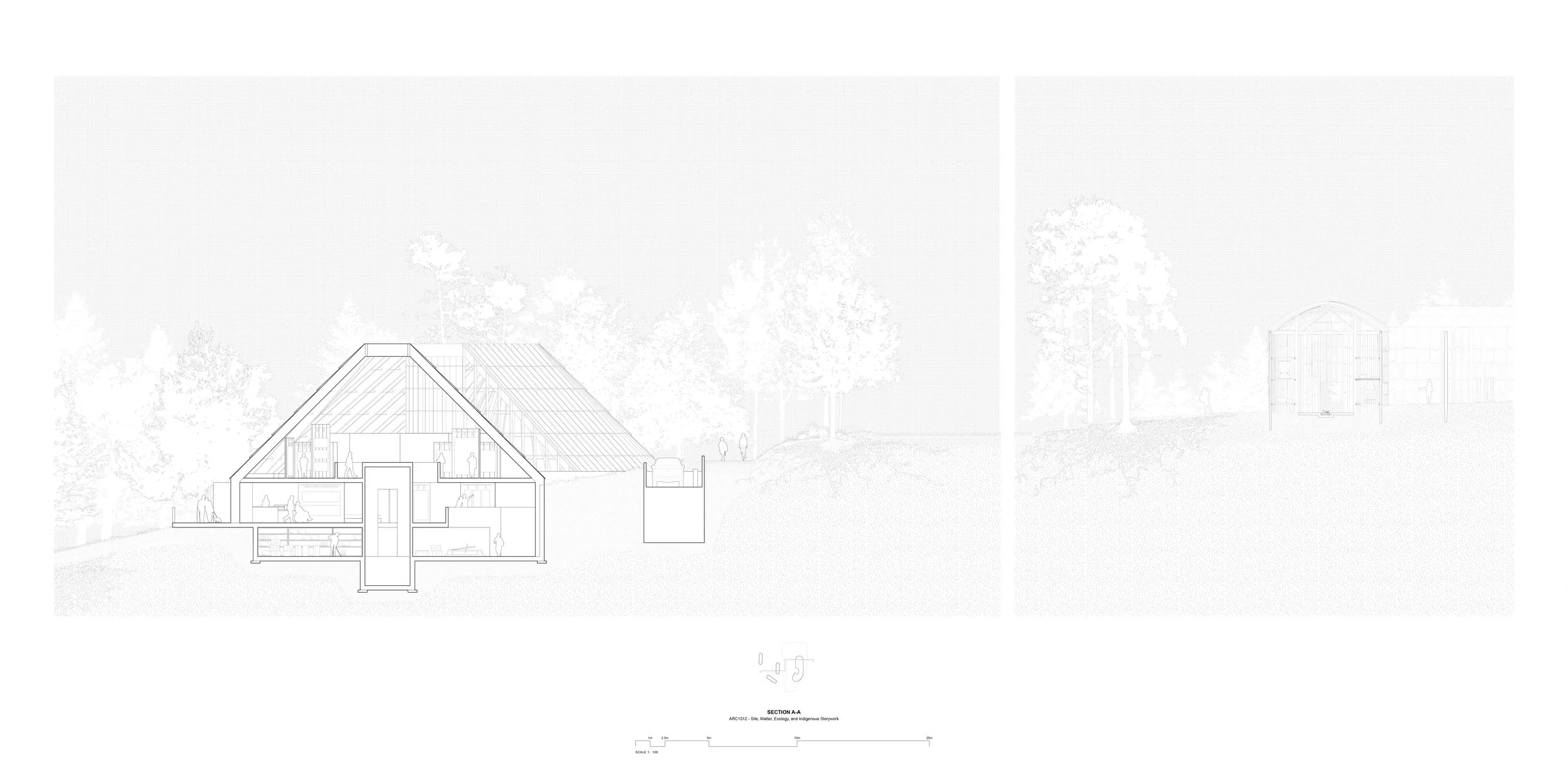
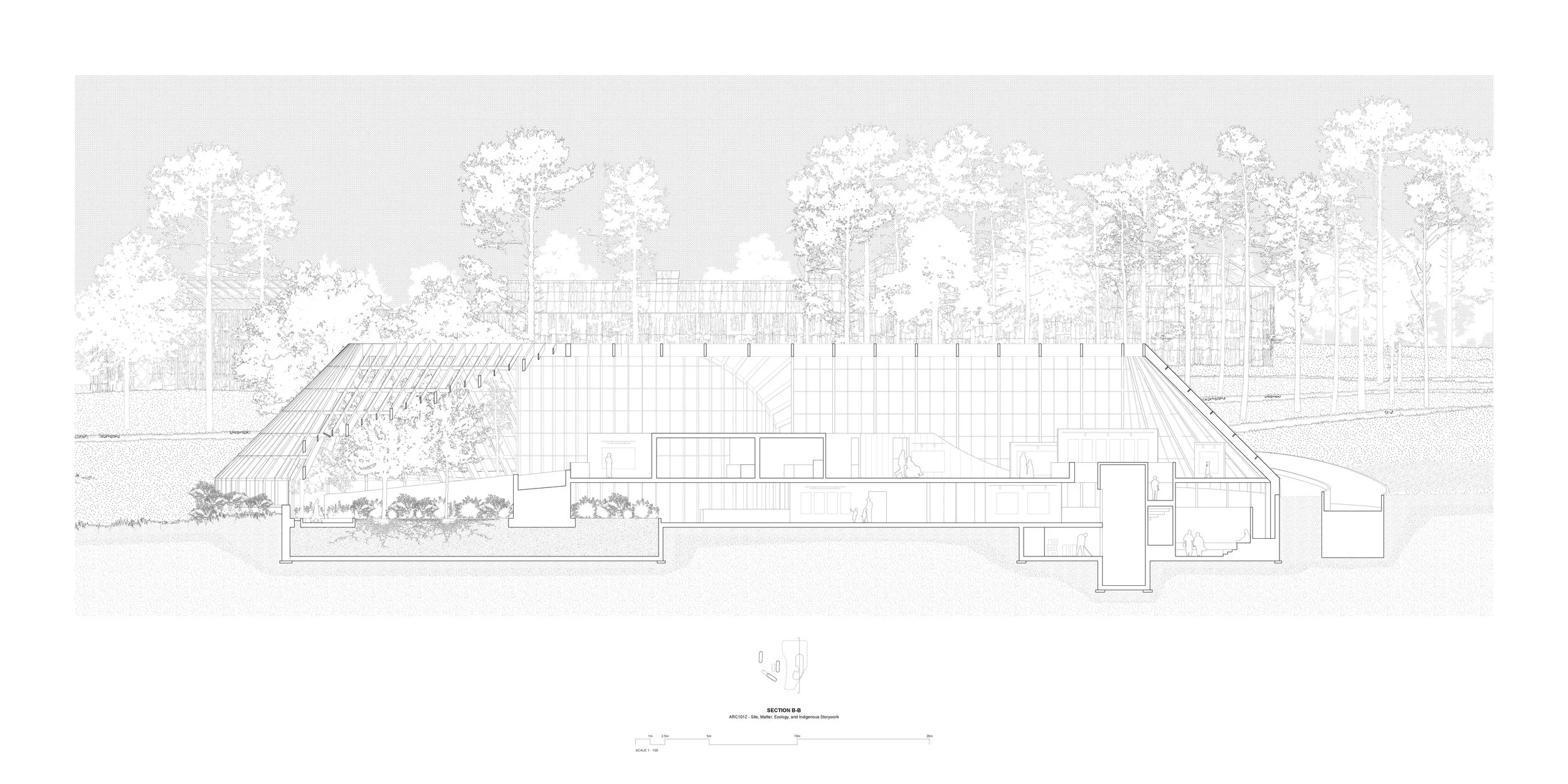
A museum for Indigenous art and public space designed for Crawford Lake, Ontario. The project challenges the conventional museum typology by introducing a gradient of spatial openness, blurring the threshold between architecture and landscape. It uses spatial experience as a symbolic journey from darkness to light—reflecting healing, memory, and cultural resilience. The museum is designed to accommodate a range of exhibition types, each responding to the needs of the work, its audience, and the intended mode of engagement with the audience.Form - Drawing inspiration from Mi’kmaw teepee and longhouse structures, the architecture is grounded in Indigenous worldviews and ecological relationships. The design of the museum responds to the site by preserving existing trees and resolving geometry based on nearby structures.Facade & Material - The building is primarily wood, with locally sourced Eastern Hemlock for structural framing and Eastern White Cedar for cladding. Aligning with Indigenous building traditions and the surrounding landscape. The cladding is expressed in three densities: solid, semi-open, and fully open.Circulation & Symbolism - Movement through the museum is designed as both a spatial and emotional journey. Visitors pass through a non-linear greenhouse path, transition into a compressed exhibition space, descend into a sunken amphitheatre, and emerge into a taller, light-filled upper level. This progression—from dark, enclosed spaces to expansive, sunlit volumes—symbolizes a path of reflection, healing, and cultural resurgence. The architecture engages land, light, and story to create a space that embodies Indigenous presence rather than simply displaying it.